Why Water Well Drilling Is Essential in West Texas
Imagine heading out to check your irrigation system on a hot summer morning, only to discover that your well isn’t producing enough water to keep up with your crops. The center pivot is running, but the pressure is dropping, and you’re already wondering how much moisture your fields will lose before the problem gets resolved. For farmers and ranchers throughout West Texas, having a dependable water supply isn’t simply a matter of convenience. It’s one of the most important factors in keeping an agricultural operation productive.
Water well drilling in West Texas provides farmers, ranchers, and rural property owners with access to underground water sources that can support irrigation, livestock, and household needs. In a region known for limited rainfall, high temperatures, and substantial agricultural water demand, properly designed wells are an important part of water infrastructure. However, groundwater availability varies by location, and successful well development requires careful planning, appropriate equipment, and responsible long-term management.
Before investing in a new water well, there are several important factors to understand:
-
Groundwater is a major source of irrigation water throughout the Southern High Plains, including agricultural areas surrounding Seminole and Gaines County.
-
Farmers and ranchers need wells designed around their actual water requirements rather than assumptions about neighboring properties.
-
Professional test pumping can help determine how much water a completed well can produce under specific conditions.
-
Pump maintenance, casing scrubbing, and air jetting may help address certain performance problems in existing wells.
-
Agricultural well drilling in West Texas must account for local groundwater conditions and applicable conservation district requirements.
At B&M Pump Irrigation Sales & Service, Inc., we’ve been helping agricultural customers manage their irrigation and water systems since 2001. As a family-owned business based in Seminole, TX, we provide complete water well services, including new well drilling, pump installation, repairs, test pumping, air jetting, and casing scrubbing. Our goal is to help farmers, ranchers, and property owners make informed decisions about their water infrastructure while getting dependable performance from their equipment.
Why Is Water Well Drilling So Important in West Texas?
Water well drilling is essential in West Texas because agriculture, livestock operations, and rural properties often depend on groundwater to supplement limited and unpredictable rainfall. Properly developed wells provide access to an important water source, allowing property owners to plan irrigation and other water needs around actual groundwater availability.
Agriculture Depends Heavily on Groundwater
The Texas Water Development Board identifies the Ogallala Aquifer as a major groundwater source underlying much of the Texas High Plains. According to the agency, approximately 95% of groundwater pumped from the Ogallala is used for irrigated agriculture.
That reliance is especially relevant to farming communities near Seminole, Seagraves, Denver City, and surrounding areas of the Southern High Plains.
Crops require moisture at critical stages of development, but rainfall doesn’t always arrive when it’s needed. Irrigation wells help producers manage water delivery more deliberately rather than relying entirely on precipitation.
However, groundwater supplies aren’t unlimited. The Texas Water Development Board reports that withdrawals exceed natural recharge across much of the Ogallala Aquifer, contributing to long-term water-level declines.
This makes responsible well development and efficient irrigation particularly important for the region’s agricultural future.
Livestock Operations Need Reliable Water
Ranchers also depend on water for livestock drinking systems, storage tanks, and other agricultural needs.
A well serving cattle or other livestock must be capable of supporting the operation’s water demand, including periods when high temperatures increase consumption.
For ranches in Gaines County and surrounding rural communities, dependable pumps and properly maintained distribution systems can help reduce interruptions.
However, the appropriate well design depends on herd size, storage capacity, property layout, and groundwater conditions.
How Does Professional Water Well Drilling Work?
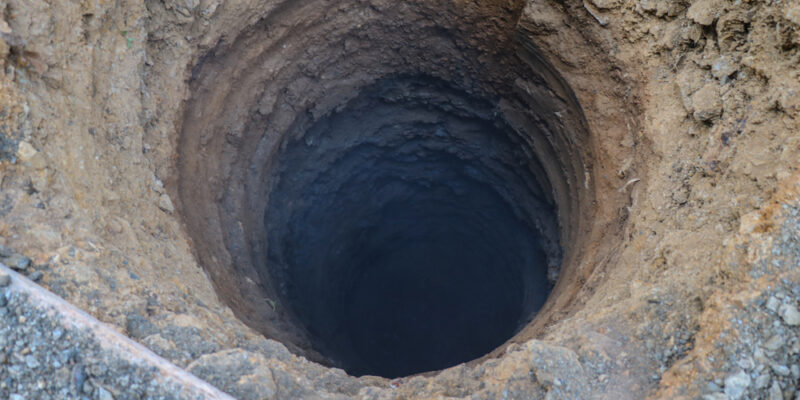
Professional water well drilling involves evaluating the property, planning the well location, drilling into an appropriate groundwater-bearing formation, constructing the well, and testing its performance. The process helps determine whether the available water source can support the intended application and which pumping equipment may be suitable.
Evaluating the Property Before Drilling
Before new water well drilling begins, it’s important to understand how the water will be used.
A well supplying a center-pivot irrigation system may have very different requirements from one serving livestock tanks or a rural residence.
Important planning considerations include:
-
The property’s location and available groundwater information.
-
Intended agricultural, livestock, or domestic water demand.
-
Expected pumping rates and operating schedules.
-
Proposed irrigation equipment and distribution requirements.
-
Applicable groundwater conservation district rules.
-
Well access for future inspection and maintenance.
-
Electrical or alternative power availability.
Historical well records and nearby groundwater information can help guide planning, but they cannot guarantee what a new well will produce.
Actual depth, water quality, and sustainable yield must be evaluated for the specific site.
Drilling and Well Construction
Once the site and applicable requirements have been reviewed, drilling can begin using methods appropriate for the geological conditions.
A properly constructed well includes components designed to help protect the water source and support the pumping system.
Casing, screens where applicable, sealing materials, and other construction details depend on the groundwater formation and intended use.
At our Seminole operation, we offer professional drilling for new wells alongside pump installation and related water well services.
We work with customers to understand their water requirements and develop an appropriate approach for their properties.
Testing the Well Before Pump Selection
After a well is developed, test pumping can help determine its actual performance.
This process involves operating a test pump and measuring water production under specific conditions. The results provide information that can guide pump selection and irrigation planning.
At our company, we provide test pumping services that measure water flow in gallons per minute along with pressure.
For agricultural producers, this information is particularly valuable because installing an oversized pump doesn’t create additional groundwater. The equipment should be selected according to the well’s capabilities and the system’s actual needs.
How Do Irrigation Wells Support West Texas Farming Operations?
Irrigation wells support West Texas farming by supplying groundwater to equipment that distributes water across agricultural fields. When wells, pumps, motors, and irrigation systems are properly matched, producers can manage water delivery more effectively while monitoring operating costs and equipment performance.
Supplying Water to Center-Pivot Systems
Center-pivot irrigation systems distribute water through sprinklers mounted along a rotating structure.
These systems require appropriate water flow and pressure to operate as designed. If the well cannot support the irrigation equipment’s requirements, water distribution may become less consistent.
For producers near Seminole and Plains, matching the well and pump to the pivot is an important part of system planning.
We offer irrigation design, center-pivot equipment, pump services, and system support for agricultural operations throughout the region.
Our experience with Reinke pivot systems and other irrigation equipment helps us discuss solutions for different field layouts and operating requirements.
Controlling Water and Energy Expenses
Pumping groundwater requires energy, and inefficient equipment can increase operating costs.
A pump that’s poorly matched to the well or irrigation system may consume unnecessary electricity or experience excessive wear.
Maintaining suitable operating pressure, addressing leaks, and monitoring equipment performance can help improve efficiency.
For farms with substantial irrigated acreage, even relatively small efficiency improvements may become meaningful over time.
Planning Around Seasonal Water Demand
Agricultural water requirements change throughout the growing season.
During hot, dry periods, irrigation demand may increase while groundwater conditions and pumping limitations still need to be respected.
A well’s performance should therefore be evaluated alongside the irrigation schedule, crop requirements, and available water supply.
Professional agricultural well drilling helps establish the infrastructure, but ongoing management remains essential.
What Water Well Services Help Maintain Reliable Performance?
Water well services help maintain reliable performance by addressing worn pumps, restricted flow, accumulated sediment, and other problems that affect water delivery. Depending on the condition of the well and equipment, services such as pump rebuilding, air jetting, casing scrubbing, and test pumping may help restore or evaluate system performance.
Pump Repair and Replacement
Irrigation pumps experience wear from repeated operation, sediment exposure, and mechanical stress.
Common problems may involve damaged components, declining efficiency, pressure changes, or equipment failure.
We provide complete pump service, including rebuilding or replacing line-shaft turbine pumps and submersible pumps.
Our in-shop machining capabilities also support pump repair work for suitable equipment.
Air Jetting and Casing Scrubbing
Air jetting is a well-service technique that uses compressed air to help remove certain accumulated materials and improve water movement under appropriate conditions.
Casing scrubbing involves cleaning the inside surfaces of a well casing to address certain forms of buildup.
These services may be useful when sediment or deposits contribute to restricted performance, although they’re not appropriate solutions for every well problem.
At our Seminole location, we provide both air jetting and casing scrubbing as part of our water well services.
Recognizing Warning Signs
Farmers and ranchers should pay attention to changes in well performance before a complete failure occurs.
Potential warning signs include:
-
Reduced water pressure at irrigation equipment.
-
Lower water production during normal operation.
-
Unusual pump vibration or noise.
-
Sand or sediment appearing in the water.
-
Unexpected increases in pumping energy consumption.
-
Frequent motor or control problems.
-
Pumps cycling or stopping unexpectedly.
-
Difficulty maintaining adequate irrigation coverage.
These symptoms may have several possible causes, including pump wear, changing groundwater levels, electrical problems, or restrictions within the well.
A professional evaluation can help identify the issue before unnecessary repairs or replacements are made.
What Should Farmers Consider Before Drilling a New Irrigation Well?
Before drilling a new irrigation well, farmers should evaluate available groundwater information, intended water demand, local regulations, and the cost of developing and maintaining the complete system. A properly planned well must account for more than drilling alone, including pumping equipment, power requirements, and long-term operation.
Understand Groundwater Regulations
Groundwater conservation districts regulate certain groundwater activities across Texas.
Depending on the property and proposed well, requirements may involve drilling permits, registration, spacing, production limits, or other conditions.
The Texas Water Development Board recommends determining whether a property falls within a groundwater conservation district and contacting that district about applicable requirements.
For water well drilling in Gaines County, TX, property owners should verify the rules governing their exact location before work begins.
Consider Long-Term Maintenance
A well represents an investment in infrastructure that may require ongoing service throughout its operating life.
Routine inspections, pump maintenance, water-quality monitoring, and performance evaluations can help identify changes over time.
For farmers managing multiple irrigation systems, keeping records of pump repairs, water production, and energy use can make maintenance planning easier.
We encourage customers to think about the entire system rather than treating drilling as a one-time decision.
Evaluate Solar-Powered Water Options
Solar-powered pumping may be useful for certain remote agricultural or livestock applications.
These systems can provide water where conventional electrical infrastructure is limited or expensive to install.
However, the suitability of solar pumping depends on water demand, pumping depth, available sunlight, storage capacity, and equipment requirements.
We install and service solar-powered well systems, including options for livestock watering and other appropriate agricultural applications.
Frequently Asked Questions About Water Well Drilling in West Texas
Why is water well drilling important for West Texas agriculture?
Water well drilling provides access to groundwater that supports crop irrigation and livestock operations in areas with limited or inconsistent rainfall. For farmers around Seminole and Gaines County, wells are important components of agricultural water infrastructure. Their performance depends on local groundwater conditions, construction, and ongoing management.
How deep does an irrigation well need to be in West Texas?
Irrigation well depth varies by location, geological formation, and the position of available groundwater. There isn’t one standard depth that applies throughout West Texas. Nearby well records can help with planning, but actual drilling conditions and site-specific evaluations determine the completed well’s depth.
How much water can a newly drilled irrigation well produce?
A new well’s production depends on groundwater availability, formation characteristics, well construction, and pumping conditions. Test pumping helps measure the flow and pressure that the completed well can provide. These measurements are important when selecting pumps and determining whether the well can support the intended irrigation system.
Does B&M Pump provide water well services in Gaines County, TX?
Yes, we provide complete water well services from our Seminole location, including new well drilling, pump rebuilding and replacement, air jetting, casing scrubbing, and test pumping. We also work with irrigation systems and related equipment. Our services support agricultural, livestock, and residential water needs.
Can an existing well be restored instead of drilling a new one?
Some existing wells may benefit from maintenance, pump repairs, air jetting, or casing scrubbing, depending on the cause of declining performance. However, these treatments cannot restore groundwater that’s no longer available. A professional evaluation helps determine whether rehabilitation or new well development is more appropriate.
What is the purpose of test pumping an irrigation well?
Test pumping measures a well’s water production and pressure under controlled operating conditions. The information helps guide pump selection and irrigation system planning. For agricultural operations in Gaines County, testing can reduce the risk of choosing equipment that exceeds the well’s demonstrated capabilities.
Can solar-powered pumps supply water to livestock in West Texas?
Yes, appropriately designed solar-powered well systems can supply water for certain livestock applications. Their suitability depends on pumping depth, daily water demand, sunlight, storage, and equipment capacity. We provide solar well pump installation and service for agricultural and livestock customers across our service region.
Does an irrigation well require a permit in Texas?
Some irrigation wells require permits or registration through the applicable groundwater conservation district. Requirements vary by location, well classification, and intended use. Before beginning well drilling in Texas, property owners should confirm current rules with the appropriate district and ensure required documentation is addressed.
Keep Your Agricultural Operation Moving With B&M Pump Irrigation Sales & Service, Inc.
Water is one of the most valuable resources supporting agriculture throughout West Texas, and having dependable infrastructure to access and distribute it can make a meaningful difference in daily operations. From drilling a new irrigation well to maintaining pumps and improving system efficiency, every component plays a role in supporting crops, livestock, and rural properties. Although groundwater availability and well performance vary from one location to another, careful planning and ongoing maintenance help property owners make better use of the resources available to them.
At B&M Pump Irrigation Sales & Service, Inc., we’re proud to help farmers, ranchers, and rural property owners throughout Seminole, Gaines County, and the greater Southwest manage their water systems. Since 2001, our family-owned business has focused on dependable service, quality equipment, and practical solutions for agricultural irrigation needs. We provide water well drilling, pump installation, repairs, testing, cleaning, and irrigation system services designed around each customer’s requirements. Whether you’re developing a new well or trying to improve an existing system, we’re here to help you understand your options and plan for reliable operation.
Get Professional Water Well Drilling and Pump Service in West Texas
Planning a new irrigation well or experiencing problems with an existing water system? Call B&M Pump Irrigation Sales & Service, Inc. at 432-758-1817 in Seminole or 432-788-8406 in Morton to discuss your property’s water needs and request service information. We’ll help you explore drilling, testing, pumping, and maintenance options that fit your agricultural operation.
Categorised in: Water Wells